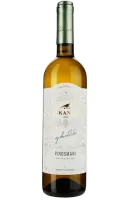
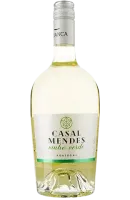
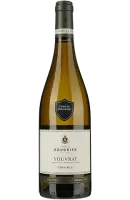
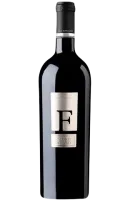
Not everyone enjoys a dry, tart flavor, but some find cloying sweetness excessive as well—that’s exactly why semi-dry wine exists. Its residual sugar content ranges from 4 to 18 grams per liter, resulting in a smoother taste without the cloying sweetness typical of dessert wines. This balance pairs equally well with meat dishes and light appetizers. For those who still prefer a sweeter taste, it’s worth trying semi-sweet wine—it contains more sugar and has a more pronounced fruit profile.
Types of semi-dry wines by color
The color of the grapes and the production method determine the flavor profile of a semi-dry wine.
Semi-dry white wine
White wine is made without allowing the must to come into contact with the grape skins, so the wine retains its light color and fresh acidity. In the semi-dry style, white grape varieties—such as Chardonnay or Chenin Blanc—offer a rounded flavor with notes of ripe fruit and a light minerality. The flavor comes through best when served chilled and pairs well with fish, seafood, and vegetable dishes.
Semi-dry red wine
Red wine is produced through prolonged contact of the juice with the grape skins, which is where its rich color and tannins come from. In semi-dry varieties, a small amount of sugar softens the astringency of the tannins, resulting in a smoother mouthfeel without the dryness on the tongue characteristic of dry red wines. Varieties such as Primitivo or Negroamaro develop a dense structure with berry and spicy notes.
Semi-dry rosé wine
Rosé wine is made from red grape varieties with brief contact between the juice and the skins—literally just a few hours, as opposed to the weeks required for red wine. Thanks to this, the wine acquires the delicate color and lightness of white wine while retaining its berry notes. The indigenous “Odessa Black” variety is often used for Odessa semi-dry rosés.
Main grape varieties for semi-dry wines
Here, everything depends on how quickly the variety accumulates sugar and whether it retains its acidity when fermentation is halted at the desired stage. Among the varieties most commonly used for semi-dry wines, the following are worth highlighting:
- Chardonnay withstands halted fermentation without losing acidity, so the sugar and freshness in the wine remain balanced;
- Chenin Blanc yields a slightly different result: the wines develop honeyed notes that are absent in Chardonnay;
- Primitivo, the Italian relative of Zinfandel, is one of the first varieties to ripen in the season, which is where its name comes from—from “primo”;
- Negroamaro from Apulia is harvested later, so wines made from it turn out softer, with less pronounced acidity.
It is precisely the combination of ripening speed and acidity stability that determines the flavor profile of the finished semi-dry wine.
Recommendations for storing and serving semi-dry wines
If a semi-dry wine is served too warm, the aroma will simply “fade”—the fruity notes will disappear, and the sugar will become overpowering. If served too cold, on the other hand, half of the bouquet will be masked. When storing, it’s best to keep the bottle in a horizontal position: this prevents the cork from drying out and letting air in. A wine cabinet is the best option.
Optimal storage conditions for semi-dry wines
|
Parameter
|
Recommendation
|
|
Storage Temperature
|
+10...+14 °C
|
|
Serving temperature (white, rosé)
|
+8...+10 °C
|
|
Serving temperature (red)
|
+14...+16 °C
|
|
Bottle position
|
Horizontal
|
|
Shelf life after opening
|
2–3 days in the refrigerator with the cork in place
|
Following these guidelines helps preserve the aroma and flavor of semi-dry wine even after the bottle has been opened.
The selection of semi-dry wines in the Benket online store from Odessa includes white, red, and rosé wines from producers in various countries. Compare prices and shipping costs, choose a brand based on your taste, and order semi-dry wine for delivery in Odessa and throughout Ukraine today.
FAQ
What is a semi-dry wine, and what is the main difference between it and dry or sweet wines?
The main difference lies in the amount of residual sugar: dry wine contains up to 9 g/L, semi-dry wine contains 9–18 g/L, and sweet wines contain more than 45 g/L. In practice, this means that semi-dry wine does not taste sweet, but it also lacks the sharp acidity of dry wine.
What types of semi-dry wines are there based on color, and how does this affect their flavor profile?
White semi-dry wines are fresh and light because the juice does not come into contact with the grape skins. Red semi-dry wines have a softer texture, as the small amount of sugar softens the tannins. Rosé wines combine the lightness of white wine with the berry notes characteristic of red varieties.
Which grape varieties are most commonly used to produce semi-dry wines?
Chardonnay and Chenin Blanc are often chosen for white semi-dry wines, while Primitivo and Negroamaro are preferred for reds. In Georgia, the Pirosmani variety is popular..
How should semi-dry wine be properly stored and served to fully reveal its characteristics?
The bottle should be stored horizontally at a temperature of +10...+14 °C, away from direct sunlight. Semi-dry white and rosé wines should be served chilled to +8...+10 °C, while reds should be served slightly warmer, around +14...+16 °C.