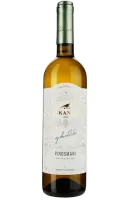
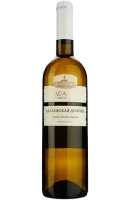
Georgia is one of the world’s oldest wine-producing countries: archaeological findings confirm that wine has been produced in this region since the eighth millennium BCE. The traditional method of making wine in clay jars called “kvevri,” buried in the ground, was added to UNESCO’s list of Intangible Cultural Heritage in 2013. Next, we’ll look at the main grape varieties, popular types of Georgian wine, and practical tips on how to choose, store, and pair it with food.
The history and traditions of georgian winemaking
Winemaking in Georgia developed in parallel with the traditions of neighboring countries in the Black Sea region, particularly the ancient viticultural culture of Moldova. However, it is the qvevri—a vessel for fermenting and aging wine underground without contact with oxygen—that remains the country’s hallmark: the temperature inside the clay vessel remains stable year-round, and the wine gradually absorbs mineral notes from the clay.
The main grape varieties of georgian wines
Georgia has over five hundred indigenous grape varieties, although only a small fraction of them is actively used in commercial production. The climate and soils of specific micro-regions, such as Kakheti or Racha, determine which varieties dominate local winemaking.
- Saperavi—a red variety with a deep, dark color and high acidity, the foundation of Kakheti’s dry and semi-sweet wines.
- Rkatsiteli — a white variety with pronounced acidity, often blended with Mtsvane to produce rounder white wines.
- Kisi — a rare white variety traditionally aged in qvevri on the skins, producing an amber-colored wine with nutty notes.
- Alexandrouli and Mujuretuli — red varieties from the mountainous Racha region, used to make Khvanchkara.
These same varieties, particularly Saperavi and Rkatsiteli, are increasingly being grown in Ukraine as well, although under local conditions they develop a slightly different profile. Together, these five varieties form the basis of virtually all classic Georgian wines with a protected designation of origin.
Popular types of georgian wines
Among the best-known names are Tsinandali (a dry white made from Rkatsiteli and Mtsvane), Mukuzani (a dry red made from Saperavi with extended aging), Kindzmarauli and Khvanchkara (both naturally semi-sweet reds in which fermentation is halted by cooling), as well as Alazani Valley—a more affordable blend for everyday drinking. Each of these names is tied to a specific region, so by law, they can only be produced within a defined territory.
Comparison of the characteristics of popular georgian wines
To make it easier to navigate the names, several examples with their characteristics are listed below. Each entry corresponds to a specific grape variety and sweetness level, so the table makes it easier to understand how one option differs from another.
|
Wine Name
|
Type
|
Sugar Content
|
Alcohol Content
|
Volume
|
|
Askaneli Saperavi
|
Dry, red
|
Dry
|
13%
|
0.75 L
|
|
Askaneli Tsinandali
|
Dry, white
|
Dry
|
12.5%
|
0.75 L
|
|
Terra Initia Kisi
|
Dry, white
|
Dry
|
13%
|
0.75 L
|
|
Askaneli Khvanchkara
|
Semi-dry, red
|
Semi-dry
|
12%
|
0.75 L
|
|
Askaneli Kindzmarauli
|
Semi-sweet, red
|
Semi-sweet
|
12%
|
0.75 L
|
These examples show that even within a single region—Kakheti—Georgian wines cover the entire range of sweetness levels. This confirms that you should start your selection by choosing your desired level of sweetness and only then pay attention to a specific name or brand.
Features of georgian wine production
Qvevri are buried in the ground up to their necks, so the fermentation temperature is regulated by the soil itself without additional cooling or heating. For red wines such as Kindzmarauli, fermentation is halted by the natural cooling of mountain cellars, preserving some of the sugar without adding concentrate. Similar traditional methods used by small wineries can also be found in Montenegro, although other indigenous varieties predominate there.
How to choose and store georgian wine properly
Before buying Georgian wine, you should decide on the level of sweetness and the dish you plan to serve it with: dry Saperavi or Mukuzani pair well with meat and aged cheeses, while semi-sweet Kindzmarauli or Khvanchkara pair well with desserts or spicy dishes. Store the bottle horizontally at a temperature of 10–14 °C, away from direct sunlight.
The selection of Georgian wines at the Benket online store in Odesa includes brands such as Askaneli Brothers, Badagoni, and Terra Initia. Compare prices, choose a brand to your liking, and order wine for delivery in Odesa and throughout Ukraine.
FAQ
What historical features and traditions of Georgian winemaking—particularly unique production methods—are worth knowing?
Georgian winemaking has a history spanning over eight thousand years, and the method of aging wine in underground clay qvevri has been recognized by UNESCO as intangible cultural heritage. This approach ensures a stable fermentation temperature and imparts distinctive mineral notes to the finished wine.
What are the main grape varieties in Georgia, and what popular types of wine are produced in this region?
The main varieties are Saperavi, Rkatsiteli, Mtsvane, Kisi, as well as Aleksandrouli and Mujuretuli. These are used to produce such well-known wines as Tsinandali, Mukuzani, Kindzmarauli, and Khvanchkara.
How do popular Georgian wines differ in terms of their key characteristics, such as type, sugar content, and alcohol content?
Tsinandali and Saperavi are dry wines with an alcohol content of 12.5–13%, while Kindzmarauli and Khvanchkara are naturally semi-sweet and semi-dry, respectively, with an alcohol content of about 12%. The difference in sugar content is due to the method used to halt fermentation.
How should you choose and store Georgian wine to fully enjoy its authentic flavor?
You should consider the level of sweetness and the dish with which you plan to serve the wine. Store the bottle horizontally at a temperature of 10–14 °C, away from direct light and temperature fluctuations.