Wine
Wine
Montenegro has a winemaking tradition that dates back to antiquity, when Greek and Roman settlers first brought grapevines to the region; industrial production as we know it today took shape in the early 20th century. The hot Mediterranean summers and the stony soils of the coastal slopes produce grapes with a high sugar content, which is why local wines are generally dry and quite tart, with a full body and noticeable alcohol content.
The main wine-growing region is concentrated around Lake Skadar and the Zeta Plain, where the climate combines the heat of a continental summer with the mild influence of the Adriatic Sea. The country’s mountainous terrain also plays a role: slopes at different elevations receive varying levels of sunlight, so even within a single region, harvests differ in sugar concentration and acidity. This terroir produces wines that are rarely light or simple—even the basic wines have a dense structure and a pronounced fruity character.
Montenegrin winemaking is based on indigenous varieties that are virtually nonexistent in this form in other countries. Among them, three key varieties stand out:
It is precisely these three varieties that create the diversity of flavors found in the Montenegrin selection. Merlot and Chardonnay, which are also popular outside of Montenegro, are widely available.
The selection of Montenegrin wines at the Benket online store in Odessa is represented by the Plantaze brand—the country’s largest producer. Each bottle undergoes the full production cycle, from harvest to bottling on-site, thus preserving the region’s authentic character and consistent quality from batch to batch.
At Benket, you can find a variety of Montenegrin wines at reasonable prices:
|
Name |
Type |
Alcohol Content |
Volume |
Price |
|
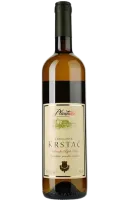
Plantaze Crnogorski Krstac |
White, dry |
13% |
0.75 L |
334 UAH |
|
Plantaze Crnogorski Rose |
Rosé, dry |
12.5% |
0.75 L |
308 UAH |
|
Plantaze Vranac |
Red, dry |
13% |
0.75 L |
324 UAH |
The sweetness here is minimal, and the flavor comes from the grape variety and aging, rather than residual sugar.
Before choosing a specific bottle, it’s worth deciding on the dish you’ll be serving, as Montenegrin wines are generally full-bodied and require a food pairing of corresponding intensity. Vranac pairs well with grilled dishes, braised meats, and aged hard cheeses, while Krstac shines when paired with fish, seafood, and light vegetable dishes. Rosé wines are a good match for cold cuts, pizza, and Mediterranean cuisine.
Montenegrin sweet red wines should be served slightly warmer than dry ones—around 17–18 °C—so that the tannins fully unfold and do not seem too harsh, sommeliers note.
Those looking for something milder should check out semi-sweet wines from other countries, while fans of the classic style should look into dry wine. It’s best to store the bottle horizontally at a moderate temperature, away from direct sunlight, and let the wine breathe in a glass for a few minutes before serving. You can buy Montenegrin wine with delivery to Odessa and throughout Ukraine right on the website: compare prices, choose the right type of wine, and order a bottle today.
What characteristics set Montenegrin wines apart from other Mediterranean wines?
Montenegrin wines are predominantly dry and full-bodied, with high alcohol content and a dense structure due to the hot climate and stony soils of the coastal slopes. Unlike lighter Mediterranean wines, mild, low-alcohol wines are almost nonexistent here.
Which grape varieties—particularly indigenous ones—are the most popular in Montenegro?
The main red variety is Vranac, which produces dense, tannic wines with notes of black cherry. Among the whites, the most common is Krstac—a fresh variety with aromas of green apple and floral undertones.
How can you navigate the selection of montenegrin wines at the Benket store, considering their characteristics and prices?
The selection is represented by the Plantaze brand in three varieties—white, rosé, and red—all dry with an alcohol content of 12.5–13%. Prices range from 300 to 340 hryvnia per 0.75-liter bottle.
What recommendations should you keep in mind when choosing a montenegrin wine, and what dishes does it pair best with?
Vranac pairs well with grilled dishes and aged cheeses; Krstac really shines when paired with fish and seafood; and the rosé variety goes well with cold cuts and pizza. The main rule of thumb is to match the body of the wine with the richness of the dish on the table.